Wearable lone worker alarms: how personal duress alarms protect staff
Work with vulnerable or unpredictable people can be rewarding, but it also changes the risk picture. A routine visit, a support conversation or a late shift can become tense without much warning. A personal duress alarm gives a worker a way to call for help when speaking freely is not safe, when a situation turns hostile, or when an incident leaves someone unable to ask for help in the usual way.
For New Zealand workplaces, the useful question is not just whether an alarm exists. It is whether the device, the response process and the worker's day fit together. A wearable alarm that sends an SOS but has no clear recipient is only half a system. A good setup connects the person, the location and a response path that someone has agreed to own.
What a personal duress alarm does
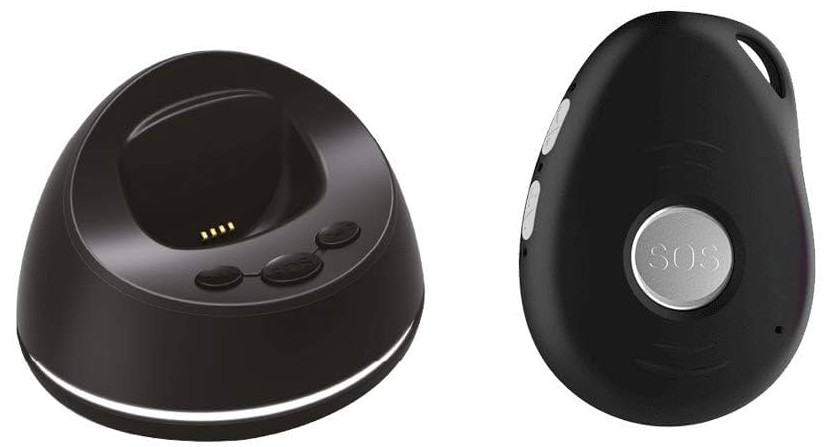
A personal duress alarm is a wearable device carried by someone working alone or in a higher risk role. Its basic job is to raise an alert quickly and quietly. Some alarms are worn as a pendant, badge or wrist device. Others are clipped to clothing or carried in a pocket. The common point is that the worker can trigger help without needing to make a phone call or explain the situation out loud.
The term duress covers more than one type of emergency. It can involve aggression, a threat, a person behaving unpredictably, a medical concern, or a worker being unable to move safely. That is why many wearable lone worker alarms include more than a single button. SOS alerts, GPS location, two way voice, man down alerts and fall detection each cover a different failure mode.
A silent alert matters when the presence of a device or a call could make matters worse. In a tense conversation, a worker may need to keep their voice calm and their body language steady. Pressing a button can be less confrontational than saying, in front of the other person, that help is needed. It can also create a record of when the trigger happened and where the worker was at the time.
How the alert path works
The device is only the start. When triggered, it sends a signal through a communications network to a monitoring point or nominated contact. That recipient then follows an agreed process. They may try to make voice contact, check the reported location, call an emergency service, or contact a supervisor who knows the site. The exact path should be simple enough that nobody has to improvise under pressure.
Two way voice can help at this stage. It allows a security contact or response team to hear what is happening and speak to the worker without requiring the worker to hold a phone. In a risky encounter, short answers may be all that is possible. A clear voice channel can confirm whether the worker is safe, whether they need immediate assistance, and whether the other person should be approached with care.
GPS adds another layer, especially for staff who move between homes, clients, sites or community locations. Location data can narrow the search area and help a responder understand whether the worker has left a building or remained nearby. It is not a complete picture of safety. Signals can be weak indoors, in basements or in remote places, and location can be delayed. That is why location should be treated as useful context, not as a guarantee.
Man down and fall detection alerts cover moments when the worker cannot press a button. A sudden fall, a loss of consciousness or a period of no movement can trigger a check in. These features are not the same as a deliberate SOS. They are designed for the case where the worker is unable to act. They also need sensible configuration, because too many false alarms can train people to ignore notifications.
Where these alarms fit in daily work
The strongest case for a personal duress alarm is work where a person may be alone with someone whose behaviour can shift. Community support, home visits, youth work, health outreach, social services, security roles and remote site checks can all involve that mix. The risk is not always a dramatic confrontation. It may be a blocked exit, a verbal threat, a crowd forming, a person refusing to leave, or a worker feeling that the tone has changed.
Workplace planning often starts with prevention. Staff may use de escalation, clear boundaries, safe seating positions, visible exits and agreed rules about when a visit is paused. Those measures matter. An alarm does not replace them. It sits behind them as a way to shorten the gap between a worker needing help and someone knowing about it.
That gap is where fast alerts during workplace violence can make a practical difference. If a worker can trigger an alert early, before a situation becomes physically dangerous, a response team has more options. They may contact the worker, arrange a safe exit, call for help or ask the worker to move to a public area. Waiting for a missed check in or a phone call can cost time that is not available.

Training should include the ordinary details that are easy to overlook. Workers need to know how to wear the device, how to activate it, what happens after activation and what to do if they trigger it by mistake. Supervisors need to know what information to give a responder and when to escalate. A device that is left in a bag, charged poorly or carried without a clear response plan will not do much when the moment arrives.
Choosing a setup that suits the work
Different roles need different combinations. A worker visiting homes may value GPS and two way voice. A staff member in a fixed site may care more about a simple panic button and a fast internal response. Someone working in a noisy or physically demanding role may need a device that can be reached without fumbling. The right choice depends on the environment, the level of risk and the response capacity behind the alarm.
It helps to map the work before selecting devices. Look at where staff go, who they are with, whether they drive, whether they carry other equipment, and how quickly another person can reach them. A wearable alarm should fit the way the job actually runs, not an ideal version of the job. If staff move between vehicles, buildings and outdoor areas, the alert path needs to remain clear through all of those changes.
Privacy also deserves attention. Location tracking and voice channels can support safety, but they should be covered by clear workplace policies. Staff should understand when location is available, who can see it, how alerts are recorded and how data is handled. Clear rules build trust, and trust makes people more likely to carry and use the device as intended.
There are trade-offs. A device with more features can be more complex to manage. More alerts can mean more monitoring work and more chances of confusion if responsibilities are vague. A very sensitive fall detection setting may generate nuisance alerts, while a conservative setting may miss a genuine incident. The aim is not maximum alerts. It is reliable alerts that lead to a response people understand.
What it means for workers and employers
For a worker, a personal duress alarm can change how a risky moment feels. Knowing that help can be called without a visible phone call may allow them to stay focused, speak calmly and leave when safe. It does not remove the need for judgement. If a situation feels wrong, the alarm is one part of a wider safety plan that includes preparation, communication and the right to stop or withdraw from an unsafe interaction.

For an employer, the device is a control that needs active management. That includes assigning monitoring roles, documenting response steps, checking that devices are charged and carried, and reviewing incidents after they occur. An incident report can show whether the alert reached the right person, whether the response was timely and whether the worker felt supported. Those details help refine both training and equipment choices.
Fast alerts during workplace violence are useful only when paired with a calm, defined response. A worker in distress does not need a complicated chain of command. They need a system that makes the next step obvious to everyone involved. That means the alarm, the contact list, the voice channel and the escalation path should be tested as one process, not treated as separate products.
A personal duress alarm is best understood as a safety link. It connects a person in a difficult moment with people who can act. When the device suits the role and the response plan is clear, it supports safer lone work without asking the worker to explain danger while they are still in it. For workplaces where unpredictable encounters are part of the job, that quiet link can be a practical part of looking after staff.